What’s so Special About Gibsons?

The decision to move to Gibsons from Edmonton in 2004, when our kids were 6, 4, and 2, and the 18 months we lived there, has had a lasting impact on our family. That time was chaotic and wonderful and stressful and fun and memorable. When some money we’d expected and been promised didn’t arrive (long story), we found ourselves in a difficult financial situation, otherwise known as being broke. Returning to Edmonton seemed the sensible thing to do. We knew we had work there. We had family and friends there too. But it was hard to leave the mountains and the sea.

Gibsons remains the most beautiful place I have ever lived. In the summer of 2005, we swam in the sea every day for SIX straight weeks because the weather was that wonderful.  

Twenty years later, I enjoy continued friendships and a strong connection to and love for the physical place. Dinners and walks with friends deepen important relationships, and being introduced to new people there extends my social network. It truly feels like a second home.

This trip, I arrived on February 22nd, the day after the earthquake that measured 4.8 on the Richter scale. I was a bit bummed that I had missed it. Ten days later, however, on March 3rd, I was awakened by a smaller quake that measured 4.1. If the 10 day pattern continued,  I mused, then March 14th, with the full moon, would bring another quake. A neighbour across the street attended an earthquake preparedness workshop and told me some of the items she’d place inside her emergency kit: books for her grandchildren; a game or two; a gratitude journal because if you lived though “the big one,” you’d want to find something for which to be grateful. 

March 14th arrived. The day was mainly sunny with a cool wind. Later, the full moon was obscured by clouds. I wasn’t able to see the lunar eclipse or catch sight of the blood moon. No quake interrupted my sleep.  

Happy Spring Everyone!

Huzzah! We made it through the dark days of winter. Happy vernal equinox. News from the studio is that I haven’t been in it much lately, but for good reason. I spent the past three weeks in Gibsons, BC, on the Sunshine Coast, dog-sitting and forging ahead on a draft of my next novel (tentatively titled The Domestics) while waiting to get “notes” back for my forthcoming book, Dog Days of Planet Earth, due for a fall 2026 publication.

Working on a new novel while waiting to edit the forthcoming one? Sounds messy, doesn’t it? 

For those not in the know, getting a book from the signed contract stage to bookstore shelves involves many steps. Included in that process are significant gap-times when the book is with the editor, and there’s nothing to be done on it but wait to hear about future edits. Tempting as it is to do nothing while waiting, a working writer writes. If I waited until Dog Days was entirely edited and ready for publication to start something new, not only would I lose valuable writing time, but I would also lose valuable writing muscles. Whatever writing skills I have would slowly atrophy. To use a sports analogy, an athlete trains in-between competitions to ensure peak performance. Similarly a writer writes between publications. So, in the ten-week window between sending the revised manuscript of Dog Days to my editor, I motored along on The Domestics.

I had big plans for my dog-sitting / writing retreat in Gibsons.

Three weeks on my own to write? I was both excited and afraid, motivated and anxious. Often, I set goals that I don’t meet and then beat myself up about being undisciplined, but I’m elated to report I wrote 20,000 words on my draft. In fact, I enjoyed the best spell of writing I’ve had in a long time, and when I’m writing well I feel great.

What made this retreat productive? Was it because I was alone, with only a dog to schedule me? Was it because I was inspired by the incredible beauty of Howe Sound outside my window? Was it the different visual distractions of water and mountains and ducks and herons and eagles and seals? Was it noticing the levels at which the boats in the marina sat at high and low tides, or seeing handsome tugboat man tugboating vehicles and equipment to Keats Island? Or could it be that I’ve finally figured out how to be a writer? 

I wish I could say it was the latter and that I’ve finally figured out how to live this writing life because that would mean a happily-ever-after book-writing future. In truth, the conditions to write in Gibsons were perfect. The gap-time added urgency. Knowing I’ll have to put The Domestics away when my edits for Dog Days hit my inbox motivated me enough that I was able to focus, because the more of a draft I have to return to, with characters I want to spend time with, the more likely it is that I’ll finish what I’ve started.

I also better understand now the superstitions I have around my writing. Break a good run, and it might not return. Change a schedule that works, and the words might disappear. I’ve learned to accept that the good writing times will end just as the bad writing times will too. It feels like a great gift when the words come easily. It is a great gift. Like the weather, would I appreciate the good writing days if they weren’t interspersed with stormy days?  So while I already believe I’ll never enjoy as good of a writing spell again, I’m open to the possibility that I’m wrong.

Editing

Editing. That’s what’s next. And a lot of it.

How quickly I moved from “if only someone would offer to publish the novel,” to, “oh no! it’s not ready!”

And so begins the second guessing and the apprehension. The fear that I have missed something significant in my research. The early stirrings of shame in my core. That old feeling of, if you really knew me, you wouldn’t like me. People will read  what I’ve spent years creating. What if it’s not enough?

Since signing another publishing contract, the fear has returned. This time, however, I know it’s part of the process. Dog Days of Planet Earth has the potential to be a a really good book, but what if I can’t get it to where I want it to be? What if I fail my characters by not getting to know them enough to explain them fully to readers? 

So, I hope for inspiration. I remind myself that I’ve been through this process twice before. I suffered significant doubt and a LOT of fear when publishing my previous novels.

The characters in The Unfinished Child and The Shade Tree exist in the world because I wrote them into being, and now they have a life of their own.

I can’t wait to introduce you to Trevor Westmore and Laura Fenway and the other characters who live in the pages of Dog Days of Planet Earth.  If all goes well, I will do them justice. 

Lorem ipsum dolor sit amet, consectetur adipiscing elit. Ut elit tellus, luctus nec ullamcorper mattis, pulvinar dapibus leo.

To Studio or Not to Studio

And now for a little backstory.

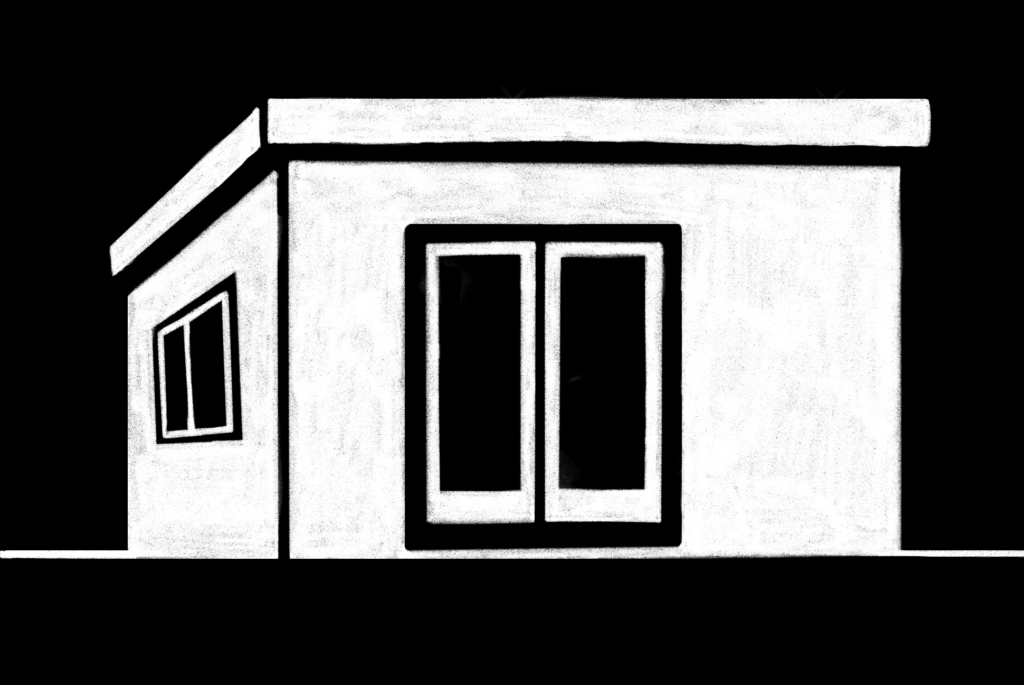
In 2018, I sent the universe a plea: I wanted a work space outside of my home from which to create. One sunny afternoon, I pulled into the parking pad beside the old dilapidated shed that was at the back edge of our property. I had parked beside it for a dozen years, but on this particular day, I looked at it with fresh eyes. Was there potential there? Might it be transformed into a studio?

I asked my friend Bruce’s opinion. We had to cut the padlock because I didn’t have the key. The shed had been storage for the various tenants who had lived in the house over the years. Inside was a host of cast off things: a roll of pink fibreglass insulation, an old lawnmower, a pair of women’s ice skates, old paint cans, rusted tools, an empty gas can, and the skeletal forms of birds that had gotten in but somehow hadn’t been able to find their way out. Needless to say, I was dubious that the space could be transformed, but I trusted Bruce when he said he could transform it. 

The bigger stumbling block was wondering if I trusted myself. Did I need a writing studio? I had written The Unfinished Child in cafés and libraries. Surely the renovation money would be better spent on my children. Was it worth investing in a small space at the edge of an alley?

Despite my fears, I took the leap. I felt like the universe had answered my plea; how else to explain my fresh vision? I told Bruce the studio needed two things: light and warmth. I asked for a set of garden doors to face the garden that I had covered over with a black tarp the previous summer because I didn’t want to tend it and the weeds were prolific.

To give me light, Bruce and his son Griffin also installed a window facing west; to give me warmth, they added a lot of insulation and an electric base heater to make the studio usable year round. 


Happy Solstice

Happy Solstice, as I prepare to send my first newsletter. It’s my intention to publish one quarterly, not clutter your inbox, and let the seasons guide the schedule. If you are reading this on my site and have not yet subscribed you can do so here.

As most of you are friends and family, nothing here will be surprising. I’m hopeful that this commitment to writing a seasonal newsletter will encourage me to chronicle all things book-ish. Who knows, I might even get better at formatting!  

For now, I’m starting winter and ending 2024 with wonderful news!

YES!!! 

I was in New York researching my next book when Jen Knoch requested a Zoom meet-n-greet. We talked for over an hour, and by the end of our conversation, I knew I wanted to work with her and E.CW The publication offer came the following week, and I didn’t hesitate to accept. I feel like my novel has found the perfect home.

Needless to say, I’m elated to have an editor who’s excited to work with me and who loves my characters as much as I do.  

In short, it’s good not to be writing alone.

Book Deal News!!!!

I’m very excited to announce I’ve signed a contract for my new novel. 


Writers spread the words at STARFest, Edmonton Poetry Festival

St. Albert Gazette: One of the most powerful Alberta writers of this decade will be a special guest at STARFest Conversations on Sunday.

Theresa Shea, a historical fiction novelist, will discuss her latest book, The Shade Tree, winner of Canada’s Guernica Literary Prize. This blistering indictment of the Jim Crow era deals with topics of systemic racism, slavery, feminism and the destructive strictures of society.

“I always wanted to write a book with characters I would want to go back and read. In fiction, you see what they think within the context of the world they live in. Sometimes, you understand why they do what they do,” said Shea.

The Edmonton-based author has a doctorate in literature, and wrote the novel over a 10-year period using every tool available including YouTube to develop an understanding of character and circumstance.

“I hope it blows up the myth that when slavery was abolished, it was fine. It wasn’t.”

From the start, The Shade Tree follows the lives of three southern women living in Florida and later Washington from 1930 to 1963. Sisters Ellie and Mavis are entitled daughters of a white orchard owner. The third is Sliver, a Black midwife who lives on a more affluent neighbouring farm.

Ellie, the older sister, is “smart, beautiful, bored and devious.” She lies about a sexual relationship with a Black man and he is lynched. Recognizing her power as a white woman, she develops a pattern of sexually exploiting Black men.

“She sees what goes on – white men helping themselves to Black women. But she gets caught, is separated and sent away,” said Shea.

Read the full text article at: https://www.stalbertgazette.com/local-arts-and-culture/writers-spread-the-words-at-starfest-edmonton-poetry-festival-6868005

The Shade Tree: Wins 2022 Georges Bugnet Award for Fiction

Release Date: June 11, 2022

The Shade Tree is announced as the winner of this year’s George Bugnet Award for Fiction during the 40th Anniversary Gala of the Alberta Literary Awards presented by the Writers’ Guild of Alberta.

https://writersguild.ca/winners-of-the-2022-alberta-literary-awards-city-of-edmonton-book-prize/

The Writers’ Guild of Alberta is the largest provincial writers’ organization in Canada. Formed in 1980, it provides a meeting ground and collective voice for the writers of the province. The Georges Bugnet Award for Fiction is sponsored by the Banff Centre for Arts and Creativity. It is awarded for a novel or collection of short fiction by an Alberta author in the previous year.

In making the award, the jury remarks included the following, “Nuanced, emotional, complex — The Shade Tree is an engaging work of fiction that unfolds systemic racism, slavery, and feminism. Theresa Shea pushes boundaries in this coming-of-age story. A brutal but compelling journey of two sisters, one who savagely exploits her privilege while the other awakens too late to the knowledge that she is also an accomplice to social injustice.”

Excerpt: Dog Days of Planet Earth

Published in Edify:

On a grey February morning in 1985, 52-year-old Trevor Westmore walked out of the penitentiary a free man.

“Wait here,” the guard said.

Membranes of ice covered the puddles in the parking lot. The sky was gun-muzzle grey. Nearby, river ice changed in light from grey to blue to green, deceiving animals and people alike with a false sense of security.