Welcome friends and new subscribers. Happy summer!
Today, June 21st, at 2:25 a.m. MST, it is officially summer and the longest day of the year. I'm ready for it! It's been a wet spring, and it's raining and cool as I write this. My furnace has just kicked on, but the air has been blissfully clear of smoke. How quickly that has become my measurement for good weather.
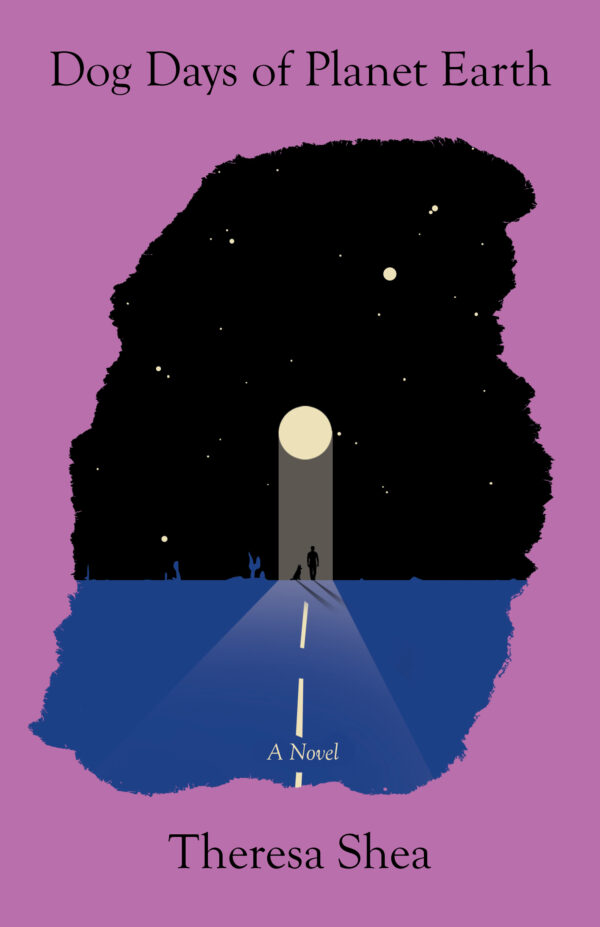
A reminder that Dog Days of Planet Earth, officially publishing on September 29th, is now available to pre-order! This handy-dandy link takes you to an indie bookstore finder near you (or see the link below for the Edmonton launch). If you are south of the Canadian border, Bookshop.org can help you out. |
| |
As I said in my spring newsletter, the final stage
of the book journey was proofreading Dog Days of Planet Earth, and I was dreading it because I knew I wouldn't be able to make any major changes.
Luckily, during this process I was also reading Elizabeth McCracken's book A Long Game: Notes on Writing Fiction. Not only do I find her to be funny and smart, but I also identify with much of her writing advice and process, her self doubt, her visions of grandeur, and her stick-to-itiveness. On knowing whether a book is finished or not she writes,
You will know that you're done with something when you can't imagine making it better. For some writers, that's a stage of exhilaration: They've done everything they can. This beautiful accomplishment! Nothing can improve it. Others of us arrive at the same place, despondent: This ramshackle thing. I've reached the end of my powers. Nothing can improve it.
And so it was with a mixture of exhilaration and despondency that I proofread the manuscript. I patted myself on the back at certain chapters, paragraphs, and sentences and quietly retreated at parts that seemed uninspired. Would readers notice?
To quote McCracken again, "Nothing perfect is interesting." I have written an interesting book.
My protagonist, Trevor Westmore, would not exist in this world if I hadn't sat down and imagined him. I'm going to miss him.
One final McCracken quote: she says her writing students often confess their problem in producing work is that they are perfectionists, to which she responds, "Oh, you don't like to fail in public, unlike the rest of us?"
I may have laughed out loud. It's funny how many of us believe we are unique in not wanting to embarrass ourselves. And it's also true that publishing feels like failing in public.
But it's not all a failure.
At a recent bookclub for The Shade Tree a reader said the novel had 99 characters in it. My first thought was, why didn't I make it an even 100? My second thought was, really? That many? Wow.
Thankfully, the accumulation of those tiny bits of amazement (I did that?) mitigates the larger fear of failing in public.
Or so I like to believe. It's pretty to think so. |
| |
So many books! What sticks out?
Novels are my books of choice, but I try to read non-fiction as well to keep myself informed about things that matter to me or things that I don't understand and want to know more about.
The Enchanted April, by Elizabeth von Arnim. Originally published in 1922 (and made into a film in 1991), what struck me most about this novel is the delightful plot and characters. Four women from London, not already friends, rent a medieval castle on the Mediterranean during an Italian spring. And nothing BAD happens. No dogs die. No natural disasters take characters out. No betrayals occur. Instead, magic and love bloom alongside the wisteria under the Italian sun. It's hard to write a happy book, and this one is truly lovely.
I'm not sure how I missed reading Flowers for Algernon, by Daniel Keyes. Marketed as science fiction when it was published in 1959, it reads more as regular fiction sixty-seven years later. Charlie Gordon is born with a low IQ, and scientists give him an operation to increase it. Told through the progress reports Charlie writes, we witness the changes in him as his intellect grows. To say more would risk spoiling it. Let's just say the book wrecked me in the best of ways. Its insights into human nature are powerful.
And now on to two non-fiction books.
Murderland: Crime and Bloodlust in the Time of Serial Killers, by Caroline Fraser, asks why so many serial killers are from the Pacific Northwest. Might it have something to do with the poisonous lead, copper, and arsenic smelters pumping out pollutants in the 1970s and 1980s? The side effects of exposure to such toxins decreased IQ and impulse control and warped minds. It's a hard read, and I had to skip a lot of the gruesome details, but I was left thinking about the incredible damage pollutants have done to the planet and all living species. And I was angered by how long it took for changes to occur and for the lack of corporate accountability. It's also difficult knowing people are still being poisoned by industry in many places because governmental watchdogs have no teeth and industry privileges profit over people.
I just finished Careless People: A Cautionary Tale of Power, Greed, and Lost Idealism, by Sarah Wynn-Williams. Who doesn't love a good whistle-blower memoir? The author is the former director of global public policy at Facebook (now Meta) and worked closely with Zuckerberg for six years. When her book came out, Meta initiated legal action that prohibited her from promoting her work. The result? She recently sat on a panel at the Hay Festival in the UK and did not say a word, on the advice of her lawyer. Sales of her book since then have increased by 300%. Readers don't like when authors are silenced.
The book is particularly interesting in light of the current fractious politics in Alberta, much of which is fuelled by misinformation and foreign influence. Wynn-Williams acknowledges that hate speech and misinformation on Facebook helped fuel the sexual violence and genocide in Myanmar, and similar misinformation and trolling helped put Trump in office. She writes, "Facebook is helping some of the worst people in the world do terrible things." Indeed, "it's an astonishingly effective machine to turn people against each other."
In short, technology is moving faster than the regulations required to govern it. This is not new, and similarities can be drawn to the mid-20th century arms race and nuclear testing.
As atomic veterans Thomas Saffer and Orville Kelly wrote in their 1982 book Countdown Zero, we are victims of “a swiftly developing technology that outran moral responsibility … in the mindless race toward nuclear superiority.” |
| |
|
Some Final Thoughts on Dog Days
|
| |
The above photo is how I picture Trevor's dog Libby.
When I get to the end of a book project, I tidy up all the notes and books I've used for research and file them away or return things to the library. Once again I note my obsessions often involve investigating moments in history where people have been duped, lied to, and exploited. I look at historical moments because readers can't help but reflect on how the present time measures up by comparison.
All roads seem to lead to the military industrial complex.
In researching Dog Days of Planet Earth, I became more informed about atomic testing done by the US government.
An atomic veteran is a veteran who was exposed to ionizing radiation when present during a nuclear test during active duty. Some of the first atomic veterans were those who were sent to Hiroshima and Nagasaki to help clean up the cities after the atomic bombings.
Upwards of 550,000 U.S. Army and Navy veterans were exposed to radiation during clean-ups and tests.
Decades after the nuclear tests ended, the United States government continued to refuse to admit that anybody was harmed by the radiation, even though many of the servicemen who were there died from or contracted and were suffering from radiation-related diseases.
While I have a tendency to lean into darkness, I am also blessed (?) with a poor memory. Perhaps this is nature's way of keeping me alive. It won't be long before I forget the exact number of atomic tests conducted, the stats for the rapidly increasing cancer rates, and other horrifying information I learned.
Because in spite of it all, I continue to remain naively hopeful about our species and our desire to do the right thing. |
| |
|
Who'd Want to Read My Book?
|
| |
Literature is about human beings and how they
make their way in the world, and we all have to look at the world and decide if it's a fitting place.
I have always found literature with a strong social justice component to be enjoyable, because it not only addresses festering problems but also often features memorable characters.
Some have stayed with me. On severe economic disparity, worker exploitation, and capitalism there's Upton Sinclair's The Jungle and John Steinbeck's The Grapes of Wrath. On racial injustice, there's Toni Morrison's Beloved and Harper Lee's To Kill a Mockingbird, to name but a few.
These novels explore the moral responsibility we have to make the world a fitting place for all living beings, and it's the characters in these works, ultimately, that keep us reading.
Toni Morrison once said, "If there's a book that you want to read, but it hasn't been written yet, then you must write it."
No book stands alone. Books inspire other books, and Dog Days of Planet Earth is informed by the work of many authors I have read and admired over the decades.
For animal lovers, justice lovers, earth lovers, and story lovers, my new novel is for you. |
| |
 |
|
OFFICIAL Edmonton Book Launch! |
|
|
|
|
| |
As the launch is still almost three months away,
I haven't officially posted the event yet. For those of you who'll be in Edmonton, save the date.
Frank's Pub is a fabulous neighbourhood gathering spot, and I'm grateful they've agreed to host my launch. That Porch Light Books is attached to the pub makes for a perfect collaboration. Edmonton readers can pre-order to help the bookstore know the number of books to order.
I have a couple of other events in the works and will keep you posted as dates are set. |
| |
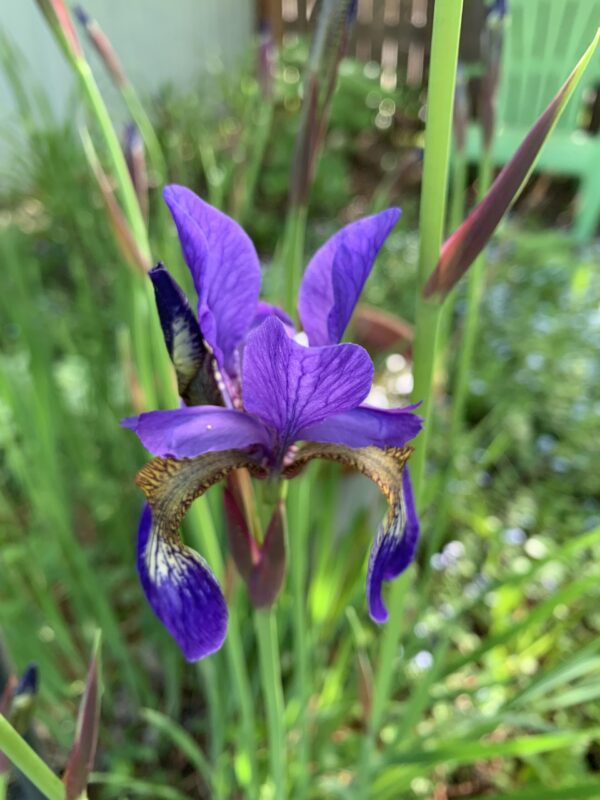
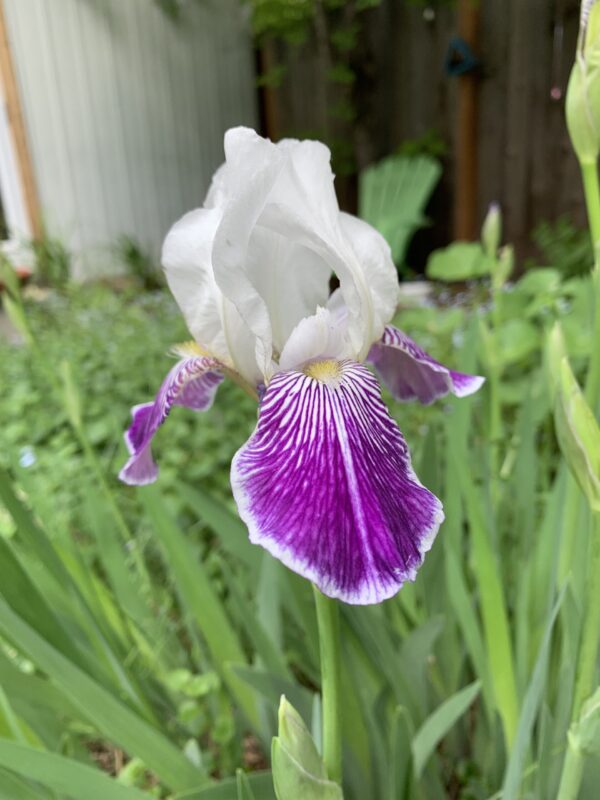
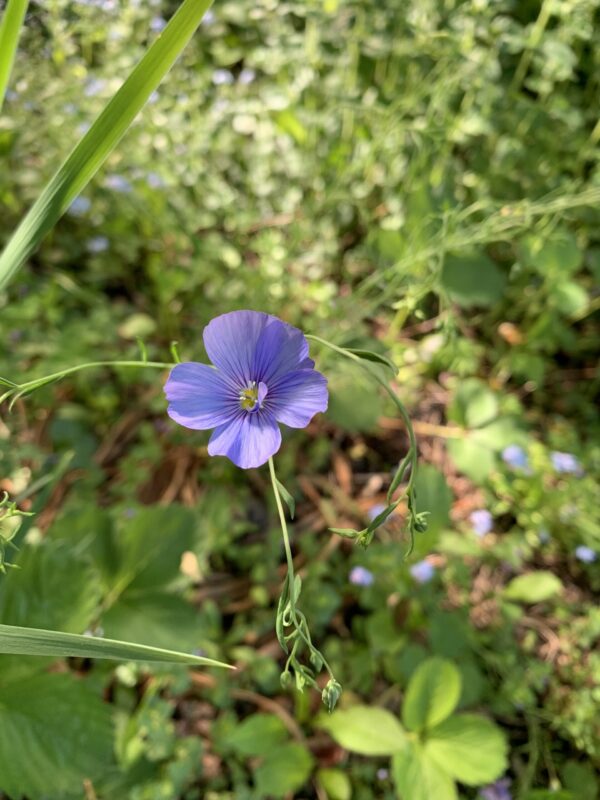
What can I say but that the earth is forgiving.
Somehow, despite the punishing damage we have inflicted upon the planet, flowers continue to grow, and birds and bees and other insects and critters continue to visit.
The beauty astounds me. |
| |
Thank you for reading.
Do you have any questions about the writing life and/or how to stay creatively inspired? Feel free to contact me.
Enjoy summer. By the time I send the fall equinox newsletter, the book will be in readers' hands.
I'll see you next season. Until then, stay engaged, and may great books find you. |
| |
|